Join Data Science Interview MasterClass (September Cohort) led by FAANG Data Scientists | Just 6 seats remaining...
Data Science MasterClass (September) | 6 seats left
Business Problem
👋 Let's get started
Suppose you are a newly joined data scientist in the Google Flights team. This team is composed of software engineers, data science manager and a product manager.
The Data Science Manager assigned you your first project — forecast airline ticket prices and provide actionable insights for travelers.
The idea was inspired by the Product Manager's observation that users frequently ask about the best time to book flights. To address this, they want to launch a new feature that helps travelers identify the optimal booking times for potential savings.
✍️ Project Description
Google Flights is a powerful flight search engine that helps you find the best deals on airfare. It's incredibly user-friendly and offers a variety of features to make your search efficient and comprehensive.
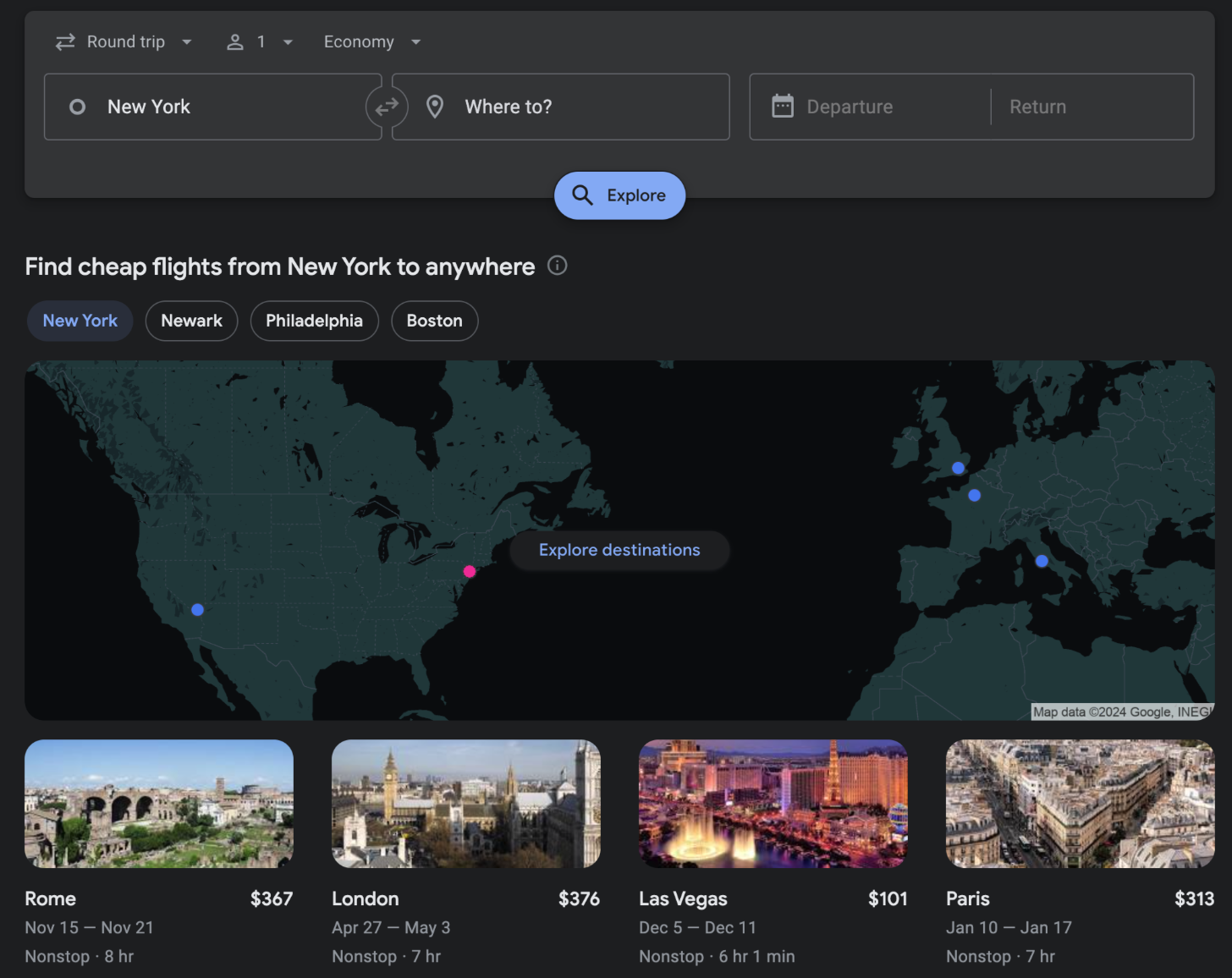
Google Flights doesn't sell flight tickets directly. Instead, it acts as a search engine, pulling data from airlines and online travel agencies.When you find a flight you like, you'll be redirected to the airline or agency's website to complete your booking.
The current features offered are:
- Extensive Search Capabilities: Search for flights from over 300 airlines and online travel agencies, comparing prices and options in one place.
- Price Tracking: Get alerts when fares change for your desired route or flight, ensuring you don't miss a deal.
- Flexible Date Search: Explore destinations with open dates to discover the cheapest travel times.
The Google Flights team wants to build a new feature called "Interactive Calendar." This enables users to view a calendar of forecasted prices based in a range of booking dates. The team believes that this could help travelers save on flight costs.
As the data science expert in the Google Flights team, your task is to propose a solution that can help the team build the Interactive Calendar feature.
Your goal is twofold:
- First, you need a machine learning model that accurately predicts airline prices based on booking time and other key factors.
- Second, you want to create a scenario analysis feature to show users what they could save if they booked on different dates. This could be a major step forward in giving users more confidence in their booking decisions and helping them secure better deals.
🎯 Key Objectives
- Predict Airline Price: Build a model that forecasts the price of a flight based on its booking date. You will be provided a historical booking data that includes departure date, booking date, airline, destination and such.
- Scenario Planning for Savings: Once your model can predict the price, we want to create a “what-if” feature. This feature will help users see how much they might save or spend by booking on different dates. For example, if a user books a flight from San Francisco to New York on December 15, they could explore alternative booking dates to see if booking on a different date would yield a better price.
Example Scenario
Imagine a user searches for flights from JFK (New York) to LAX (Los Angeles) on November 1, with a departure date of December 1. Your model should predict price ranges across alternative booking dates within a fixed period, such as November 1 to November 7. Using this simulation tool, you could demonstrate, for example, that booking on November 3 might save the user $50 on average.
These insights empower users to make more informed decisions, ultimately boosting both satisfaction and engagement on the platform.
📝 Deliverable
Your final deliverable should include a fully developed solution with accompanying code. As an added bonus, create a video presentation that explains your methodology in a way that a business lead can easily understand. The presentation should showcase key insights, highlight practical savings scenarios for travelers, and use visuals, example cases, and clear, concise explanations to communicate the impact of this feature.
This project has the potential to revolutionize Google Flights by introducing an intuitive, data-driven savings tool for users. Let’s see how your solution can empower travelers to find the best deals and make smarter booking decisions!
📊 Downloads
Boilerplate Template
To help you get started, we’ve provided a boilerplate in the form of a Jupyter Notebook.
Dataset
You’ll be working with a simulated dataset containing two years of flight booking data. Use this dataset to address the project’s key objectives using data science methods.
*Note that this is not a real dataset, it has been simulated to reflect real-world scenarios.